
by Maya Hatt | Jul 21, 2026 | Business Server |
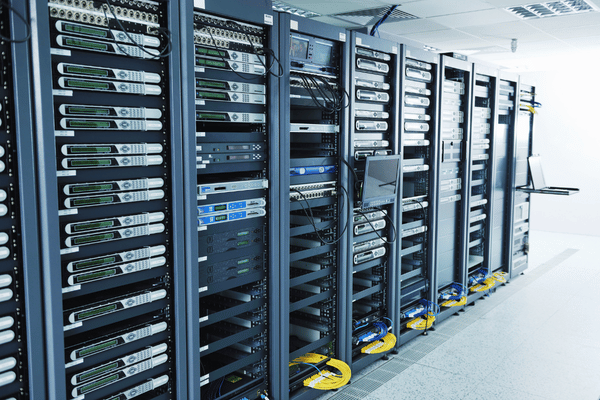
Choosing between Lenovo vs. Dell servers depends on your workload, space, support needs, and budget. Dell PowerEdge servers are strong choices for offices, branch sites, data centers, AI work, and file storage. Lenovo servers also offer strong rack and tower options for business use. This guide compares key Dell PowerEdge models so you can see where each one fits.
Table of Contents
Lenovo vs Dell Servers: What to Compare

Dell and Lenovo both sell rack and tower servers for small firms, mid-size teams, and large data centers.
Dell uses iDRAC and OpenManage tools for server control. Lenovo rack servers use XClarity and support Redfish tools. Both brands focus on remote access, firmware updates, and security.
The biggest shift in 2026 is AI demand. MarketsandMarkets reports that the AI server market may grow from $142.88 billion in 2024 to $837.83 billion by 2030. This is why more buyers now look at core count, GPU support, DDR5 memory, PCIe Gen5, and power use.
For most businesses, the right choice is not about brand alone. It is about fit. Match the server to daily work first. Then compare support, price, parts, and long-term growth.
Dell PowerEdge Model Comparison
Dell PowerEdge R6615
The R6615 is a 1U, single-socket rack server with one AMD EPYC 9004 processor. Dell lists support for up to 128 cores, DDR5 memory, PCIe Gen5, and high-density NVMe options.
Compared with other single-socket servers, it is strong for virtualization, databases, and dense compute jobs. It can give a high core count without the cost of a two-socket system.
Dell PowerEdge R930
The R930 is a legacy 4U, four-socket server. It supports up to 96 cores and up to 12 TB of memory, based on Dell’s published specs.
Older enterprise apps that require a lot of CPUs or large memory pools can still use it. However, more recent two-socket servers frequently use less rack space and offer faster speed per watt.
Dell PowerEdge R430
Intel Xeon E5-2600 v4 processors power the R430, a vintage 1U, two-socket rack server. For labs, backup jobs, and light virtual machines, it can be an inexpensive reconditioned choice.
Although the price may be appealing, the speed and power consumption are inferior to those of modern DDR5 and PCIe Gen5 systems. Purchase it only if long-term speed is less important than budget.
Dell PowerEdge R240
The R240 is an older entry-level 1U server. Dell lists one processor, four DIMM slots, and up to four 3.5-inch drives.
It fits basic file, web, mail, and small office workloads. In its class, newer options like the Dell R260 and Lenovo ThinkSystem SR250 V3 offer newer CPUs and DDR5 memory.
Dell PowerEdge C4140
The C4140 is a 1U, dual-socket server made for GPU-heavy work. Dell lists support for up to four double-wide GPUs.
It compares well in GPU density because it packs strong accelerator support into a small chassis. The tradeoff is limited storage, so it works best for AI, modeling, and research jobs.
Dell PowerEdge R750XS
The R750XS is a 2U, two-socket rack server with 3rd Gen Intel Xeon Scalable processors. Dell lists support for up to 32 cores per CPU.
It is a good fit for storage-heavy work, VDI, virtualization, and business apps. It is not Dell’s newest 2U platform, but it still gives strong value for many teams.
Dell PowerEdge T640
The T640 is a 5U rackable tower server. Dell lists support for two Intel Xeon Scalable processors, up to four GPUs, and large drive counts.
It compares well against other tower servers when storage and expansion matter. It is best for offices that need local server power without a full rack room.
Dell PowerEdge R250
The R250 is a 1U entry-level server with Intel Xeon E-2300 support, four DDR4 DIMM slots, and up to four 3.5-inch drives.
It is better than the older R240 for small business rack setups. But in 2026, the Dell R260 and Lenovo ThinkSystem SR250 V3 are more current choices.
Dell PowerEdge T140
The T140 is an older single-socket tower server. It supports Intel Xeon E-2100 and E-2200 processors.
It fits small office jobs like file sharing, print work, POS systems, and basic storage. Compared with newer towers, it has less growth room but can still work as a budget office server.
Dell PowerEdge R450
The R450 is a 1U, two-socket rack server with 3rd Gen Intel Xeon Scalable processors. Dell lists support for up to 24 cores per CPU and 16 DIMM slots.
It compares well with other 1U business servers for virtualization, apps, and branch office workloads. It is a strong middle choice when the R250 is too small, and a 2U server is too much.
Quick Server Comparison Table
| Model | Best Fit | Main Note |
|---|---|---|
| R6615 | Virtualization and databases | High core count in a compact 1U server |
| R930 | Legacy enterprise applications | Large memory capacity on an older platform |
| R430 | Budget used server | Low purchase cost but lower power efficiency |
| R240 | Basic small office work | Older entry-level rack server |
| C4140 | AI and GPU workloads | Supports up to four GPUs in a 1U chassis |
| R750XS | Storage and VDI | Strong 2U business server option |
| T640 | Local office server | Tower design with strong storage and expansion |
| R250 | SMB rack setup | Basic and affordable 1U server |
| T140 | Very small office | Budget-friendly tower server option |
| R450 | SMB virtualization | Balanced 1U two-socket server |
How to Choose the Right Server

Start with the work the server must run.
- Small office: Choose R250, R260, T140, or a Lenovo entry server.
- Virtual machines: Look at R450, R6615, or R750XS.
- Storage-heavy work: Compare R750XS, T640, and Lenovo rack servers.
- AI or GPU work: Start with C4140 or newer GPU-ready platforms.
- Used server budget: Consider R430, R240, or R930 with care.
For current Lenovo server solutions, Down to Earth Technology helps businesses compare Lenovo servers, workstations, and support needs before buying.
How does the Dell PowerEdge R6615 compare to other servers in its class?
The R6615 is strong for a single-socket rack server. Its AMD EPYC 9004 CPU can support very high core counts. It works well for dense virtual machines, databases, and compute-heavy tasks.
Is the Dell PowerEdge R930 still good for business use?
The R930 can still run older enterprise apps that need four CPUs or large memory. It is not the best fit for most new builds. Newer two-socket servers often use less power and take up less space.
How does the Dell R430 compare in performance and price?
The R430 is usually a low-cost refurbished option. It can handle light virtual machines and basic workloads. It is slower and less power-friendly than newer servers.
How does the Dell PowerEdge C4140 compare to other GPU servers?
The C4140 is strong when GPU density matters. It supports up to four GPUs in a 1U chassis. It is best for AI, research, and computing work, not for large storage.
Are Lenovo rack servers a good alternative to Dell?
Yes. Lenovo rack servers can match Dell in many business workloads. The best choice depends on support, pricing, management tools, and the hardware your IT team already knows.
Which Dell PowerEdge server is best for a small business?
The R250 works for basic rack needs, but the R260 is the newer option. The T140 can work for very small offices on a tight budget. For growth, consider the R450 or similar Lenovo server solutions.
The best server is the one that fits your workload, budget, and support plan. Dell PowerEdge servers offer strong choices for small offices, virtual machines, storage, and AI work. Lenovo servers are also worth comparing when you want strong rack or tower options. To make the right choice, review your apps, users, storage, and growth plans first.
Need help choosing between Lenovo and Dell servers? Get a quote from Down to Earth Technology to compare the right server options for your business.